
He drops for World Cup glory
- David Brand

- May 11, 2020
- 6 min read
‘He drops for world cup glory…!’
People have sometimes only half-joked that my life is marked in relation to sporting events. It’s sometimes a cause of frustration to them. It’s sometimes been a cause of pride in me.
————-
The 2003 Rugby World Cup Final – 22nd November – Australia 17 – England 20
I love my rugby. I grew up in Gloucester, a city that cares about little else. I was coached at secondary school by the inside centre for Gloucester at the time. I dined out (possibly still do) on the story that, as an 11-year-old aspiring left winger, I scored my first try by sprinting around and outpacing an 18-year-old sixth-form student who was helping coach our games lesson in late 1992.
That sixth-form student was Phil Greening, later to play for Gloucester, Wasps and England, and also tour with the 2001 British and Irish Lions. That sixth-form student also clearly wasn’t trying too hard that day, but I choose to ignore that when telling the story.

I thought I loved rugby because it’s a good sport. I don’t believe that’s the real reason though.
I’ve come to believe it’s about what it represents to me. I’d grown up in a city where it’s a way of life, and where going to matches at Kingsholm on a Saturday afternoon at 3pm was a celebration, a time of bonding, of community cohesion, and of joy.
Everyone was mixed in together, and there was an equality between doctors, the unemployed, lawyers and factory workers. It wasn’t a forced equality; people were there because they really wanted to be, and chose to unite behind a common love (Gloucester Rugby Football Club) and a common purpose (cheering on the team). And then people had a beer together afterwards and chatted. It was, and still is, massively significant to the city, it’s of huge benefit and this culture has remained largely intact in the over 30 years I’ve been supporting Gloucester.
It’s all about connection with other people.
My grandfather took me to my first game at Kingsholm in November 1991. In 2019, I took my seven-year-old daughter Ellen to her first match there. I deliberately chose tickets in the new grandstand that is now the same spot as where I stood in 1991. I was so emotional when I took Ellen to the match, I was fighting back tears for most of the game.
That sounds pretty stupid, until you consider the reasons why it is so significant for me. It’s all because of what going to a matchday at Kingsholm represents – community togetherness and cohesion.
—————–
People need love
On 22nd November 2003, it was the greatest day ever in the history of English Rugby Union. England won the Rugby World Cup in Sydney, Australia – in a dramatic extra time finish.
As Jonny Wilkinson’s right-footed drop goal sailed over the posts, and Iain Robertson barked out the immortal line of commentary that this note is named after, the country celebrated – and you’d have thought I’d be absolutely elated. After all, the two starting props – Phil Vickery and Trevor Woodman – for the match were from Gloucester RFC.
But I wasn’t. I was totally underwhelmed.
As the final whistle went as Mike Catt punted the ball off the park in Stadium Australia, my thought was: ‘Ok. That was nice, good on them.’
And not a lot more.
The reason for my nonplussed attitude? Due to the game being on in the early morning UK time, and me not having any rugby-fan friends in my university hall of residence in Durham, England, I elected to watch the game alone in my bedroom.
And it was a dispiriting experience. I felt truly disappointed that I’d let a once-in-a-lifetime opportunity slip through my hands, by not having anyone to share it with. No one to share the joy with, not even a random stranger to hug…
People need community
Something lodged itself in my mind that November morning that has sunk in over the years since. The only thing that makes a potentially enjoyable experience actually enjoyable, is being able to share it with others. I can think of lots of occasions that’s happened, as I’m sure you can.
It’s dawned on me that even if I’ve had an experience while on my own, when I get back to being with people, pretty much the first thing I want to do is share it and talk about it. I like to trail run on my own a lot, and the desire to share the story of my run happens every time when I return home. And funnily enough, when I trail run, that’s when I best meet God, so I’m not ever alone anyway when I’m out on the trails.
It needn’t just be sports either – think of concerts where the crowd moves as one such as Glastonbury or the legendary Oasis gigs at Knebworth House in 1996, or think of a cinema after a brilliant film where people want to spontaneously applaud.
God often moves in unexpectedways
In 2019, I went to the live recording of the BBC podcast Tailenders at the Hackney Empire. For anyone who hasn’t listened to Tailenders, it’s a tricky one to describe.
It’s a loosely cricket based comedy podcast, presented by the seemingly eclectic trio of the DJ Greg James (from the BBC Radio 1 Breakfast show), Felix White (guitarist in the British indy band the Macabees), and Jimmy Anderson, the England cricket team’s greatest ever (and still playing at the highest level) fast bowler.
On paper it just sounds weird. But it is brilliant – witty, silly, odd, encouraging, doesn’t put anyone down, and celebrates community and joy and connection and relationships.
I went to the Hackney Empire on that November Sunday afternoon with my friends Steve and Guy – dad friends from Ellen’s school gate. They’re both around 15 years older than me, but we had bonded over having kids in the same class, and talking a lot about rugby and cricket and occasionally politics. Our trust of each other grew over time, and we started sharing about our families too, sometimes sharing poignant and funny stories of life experiences.
Their grace, support, love and friendship has been tangible over the last few years. Although neither of these gentlemen subscribe to an organised religion, I’ll go as far as saying I’ve experienced God more fully by being friends with them.
As I was sat next to Guy and Steve in the theatre in Hackney – a funny sight as 3 six-foot-plus chaps (I just scrape into that bracket – Guy and Steve have 3 or 4 inches on me) tried to sit in seats with a less than comfortable amount of leg room, while trying to not invade each others’ personal space too much – Guy and I remarked that we were finding this an oddly spiritual experience. Guy said how is was about people from all parts of the country, just sharing fun for no other reason than it’s a joy, and doing so with kindness, humility and without fear of condemnation.
It was wonderful, I felt very alive for just being there. Greg, Felix and Jimmy kept calling it a “safe space” for cricket and comedy fans. I’m not sure they know how profound they were being. I like it that God has a sense of humour, and just as in the bible, uses ways and people we don’t expect to teach us about life.
Ubuntu life
Connection, shared experience, relationships – whatever you choose to call it – is what I believe makes life rich and full. Even in sad times after someone we love has died our custom as society is often to meet and share profound, humorous, wise, lovely stories about the person who’s passed away. We don’t force it, we just do it; we know in our guts it’s a good thing to do.
Sharing not only enables potentially good experiences becoming joyous ones, I believe that it enables some of life’s toughest experiences to be endured. The experience itself is no less painful, but we realise we need quality, trusting, tight relationships to survive it. I’ve learned so much from my great friends Jason O’Shea and Michael Chitwood in that regard.
I’ve come to believe that on my own, I’m nothing. I’m not an island. I’m unable to live healthily outside of a loving community.
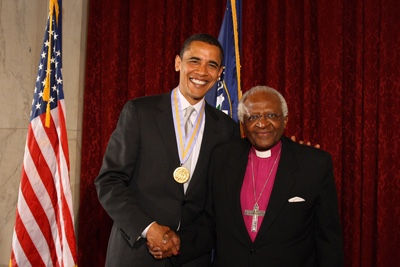
I love the Swahili word Ubuntu. In one word it encapsulates this belief, and resultant attitude and community culture in a way there isn’t an English word for. Archbishop Desmond Tutu describes it like this, in his book No Future without Forgiveness:
“Ubuntu […] speaks of the very essence of being human. [We] say […] “Hey, so-and-so has ubuntu.” Then you are generous, you are hospitable, you are friendly and caring and compassionate. You share what you have. It is to say, “My humanity is caught up, is inextricably bound up, in yours.” We belong in a bundle of life. We say, “A person is a person through other persons.”


Comments